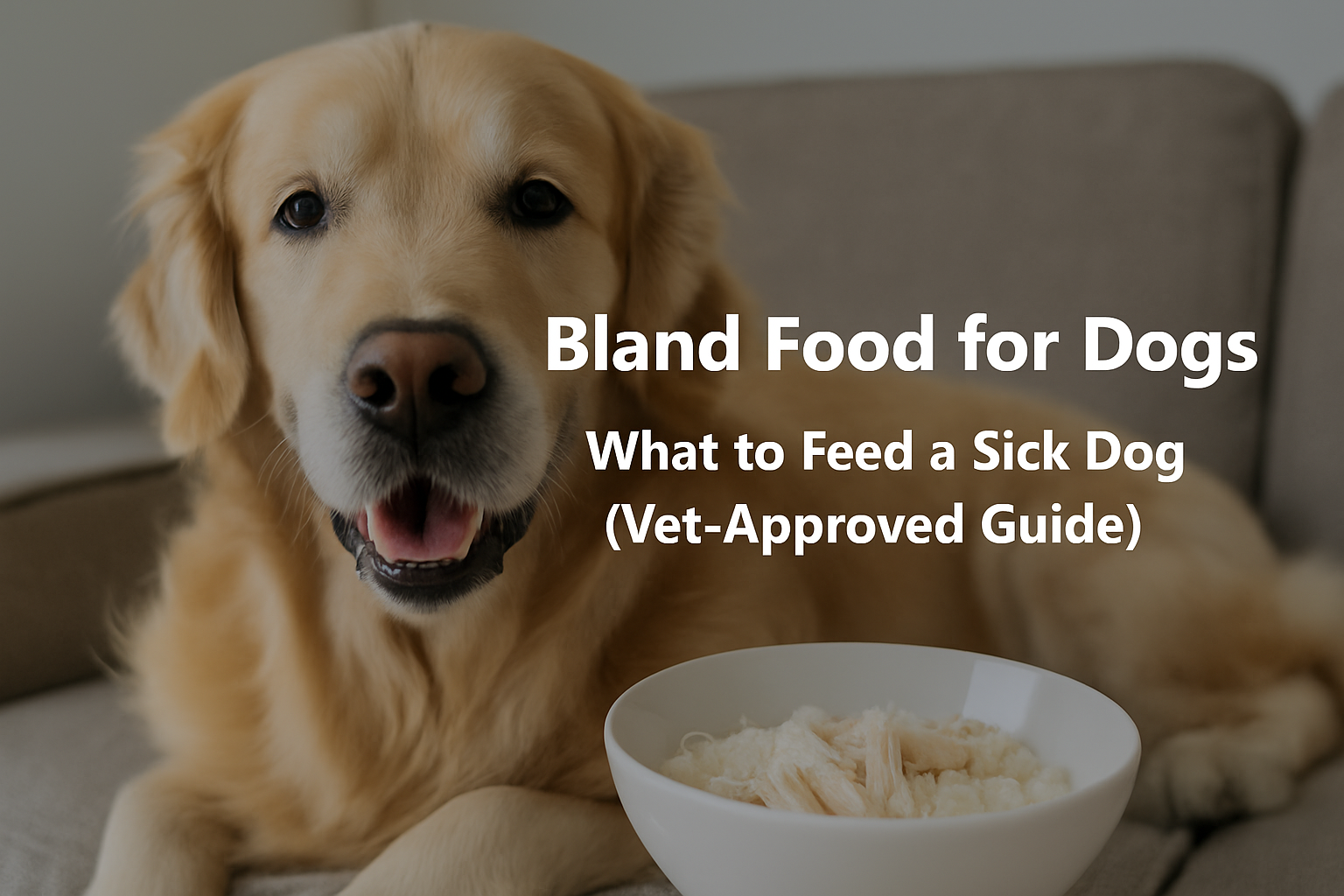
Bland Food for Dogs – What to Feed a Sick Dog (Vet-Approved Guide)
Dogs get upset stomachs just like we do — and when they do, the right bland food can make all the difference.
Whether your pup has been vomiting, has diarrhea, or just isn’t acting like their usual self, switching to a gentle, bland diet can help soothe their tummy and speed up recovery.
In this guide, you’ll discover vet-approved bland food options for dogs, when and how to use them, and a simple recipe you can prepare at home.
Let’s get your furry friend back on their paws!
What Is Bland Food for Dogs?
Bland food for dogs refers to a simple, gentle diet made with easily digestible ingredients. It’s often recommended by veterinarians when your pup is experiencing digestive upset—such as vomiting, diarrhea, or loss of appetite.
The goal of a bland diet is to give your dog’s stomach a break while still providing essential nutrients and hydration. It avoids rich, fatty, or spicy ingredients that could make symptoms worse.
A typical bland food meal for dogs includes:
- Lean protein like boiled chicken or ground turkey (no skin, no seasoning)
- Plain carbs like white rice, mashed potatoes, or cooked pasta
- Optional add-ons like pumpkin or bone broth to aid digestion
This type of food is designed to be soothing on the stomach, easy to digest, and quick to prepare. It’s not a long-term diet, but rather a short-term solution—usually fed over 3–5 days to help your dog feel better and return to their normal eating routine.
Think of it as a “reset button” for your dog’s gut.
Whether your dog has a sensitive stomach, just had surgery, or ate something they shouldn’t have, bland food for dogs can be a safe and effective way to support recovery without medication.
When Should You Feed Bland Food to Your Dog?
There are several situations when switching to a bland diet is the smartest, safest option for your dog’s health. It’s not just for severe illness—many common digestive issues can benefit from a gentle meal plan.
Here are the most frequent cases when you should feed bland food to your dog:
1. After Vomiting or Diarrhea
If your dog has vomited once or twice, or has loose stools but is otherwise acting normal (no fever, no blood, no lethargy), feeding bland food for 1–3 days can help settle their digestive system. Start with small portions and observe how they respond.
If vomiting or diarrhea continues for more than 24 hours, consult your vet.
2. After Eating Something Unusual
Dogs love to “explore” with their mouths, and sometimes they eat trash, grass, or even spoiled food. While it may not require emergency care, their stomachs might react badly. A bland diet acts like damage control—calming inflammation and preventing further upset.
3. Post-Surgery or Medical Treatment
Many veterinarians recommend a bland diet after surgery, anesthesia, or antibiotic treatment. These can affect your dog’s appetite and gut flora. Offering simple, warm, bland meals can encourage eating while minimizing risk of nausea.
4. During Periods of Stress or Travel
Dogs are sensitive to change. Moving homes, being boarded, or riding in cars for long distances can trigger stress-related digestive issues. Feeding bland food for dogs can help reduce the impact of nerves on their gastrointestinal tract.
5. For Dogs with Chronic Sensitive Stomachs
If your dog often has soft stools or vomits without any identifiable cause, a vet-approved bland diet can be a safe fallback during flare-ups. While it’s not a cure, it helps stabilize their system and gives you a clear baseline to monitor changes.
In short, anytime your dog shows mild GI issues and is still alert, hydrated, and responsive—bland food is a go-to solution. Just make sure to introduce it gradually, keep them hydrated, and always reintroduce their normal food slowly.
✅ Bland food isn’t forever—it’s a healing pause for their gut.
Best Ingredients for Bland Food for Dogs
When preparing bland food for your dog, simplicity is key. The goal is to provide easily digestible, gentle ingredients that help settle the stomach and maintain hydration without irritating the digestive system.
Here are the top vet-approved ingredients to include:
1. White Rice
A classic base for bland diets. White rice is easy to digest, helps firm up loose stools, and provides simple carbohydrates for energy.
- How to cook: Boil until very soft with no added salt or oil.
2. Boiled Chicken (No Skin, No Seasoning)
Lean protein helps maintain strength while avoiding fats that may upset the stomach.
- How to prepare: Skinless, boneless chicken breast boiled and shredded.
3. Plain, Cooked Pumpkin
Pumpkin is rich in fiber and can help regulate digestion.
- Tip: Use plain canned pumpkin (not pie filling with sugar/spices).
4. Boiled Potatoes (No Skin)
Another easily digestible carb source, perfect for variety.
- Note: Avoid adding butter, milk, or seasonings.
5. Cottage Cheese or Plain Yogurt (In Small Quantities)
These provide beneficial probiotics and protein but should only be given if your dog is not lactose intolerant.
- Use cautiously: Introduce slowly and in small amounts.
6. Bone Broth (Unsalted)
Rich in nutrients and very soothing for hydration and appetite stimulation.
- Choose homemade or low-sodium store-bought versions.
Portion Tip
Stick to small portions (¼ to ½ of your dog’s normal serving size) and increase gradually over 2–3 days if they tolerate it well.
Always check with your vet before introducing new ingredients, especially if your dog has underlying conditions.
How to Prepare a Simple Bland Meal at Home
Here’s a basic bland meal recipe you can prepare in 15 minutes:
Ingredients
- 1 cup white rice (cooked)
- ½ cup boiled chicken (shredded)
- 2 tablespoons plain pumpkin
Instructions
- Cook rice until very soft.
- Boil and shred chicken.
- Mix rice, chicken, and pumpkin together.
- Cool before serving. Serve in small amounts.
Feed 2–3 small meals per day and monitor their reaction. Fresh water should always be available.
When to Switch Back to Regular Food
Switching back to your dog’s normal diet should be gradual.
- Start mixing 75% bland food with 25% regular food.
- Over 4–5 days, increase the regular food ratio.
- Monitor for any return of symptoms (vomiting, loose stools, etc.).
If symptoms persist, consult your vet immediately.
Final Thoughts
A bland food diet is a powerful, vet-recommended tool to help your dog bounce back from digestive troubles. It’s easy, effective, and affordable.
Just remember:
- Always confirm with your vet if symptoms persist.
- Don’t use bland food long-term without professional guidance.
- Tailor ingredients based on what works best for your pup.
Bookmark this guide for future stomach troubles—and help keep tails wagging!
Sample 3-Day Bland Food Feeding Schedule
If you’re unsure how much and when to feed bland food, here’s a simple vet-style schedule to follow over three days. Always adjust based on your dog’s size, energy level, and vet recommendations.
Day 1 – Small Portions, Frequent Meals
- Meal 1 (Morning): 1–2 tablespoons of plain boiled chicken and rice
- Meal 2 (Midday): Small serving of mashed pumpkin or sweet potato
- Meal 3 (Evening): 1–2 tablespoons of rice with a bit of boiled turkey
→ Keep meals soft and at room temperature. Watch for any signs of discomfort.
Day 2 – Slightly Increased Portions
- Increase each meal by 25–50%
- Optional: Add a spoon of plain, non-fat Greek yogurt for probiotics (if tolerated)
- Continue 3 meals a day
Day 3 – Start Transitioning Back
- Morning: 75% bland, 25% regular kibble
- Midday: 50/50 mix
- Evening: 25% bland, 75% regular
⚠️ If symptoms return, go back to 100% bland food and consult your vet.
✅ This schedule is just a guide — always tailor it to your dog’s needs and vet’s advice.
Homemade Bland Recipes by Dog Weight
Feeding the right portion based on your dog’s weight is key to effective recovery. Here’s a simple vet-style breakdown of bland meals you can prepare at home, adjusted to your dog’s size:
Small Dogs (Under 10 lbs / 4.5 kg)
- Meal Example:
- ¼ cup boiled white rice
- 1 tablespoon boiled chicken (no skin, no bones)
- Optional: A small spoon of plain pumpkin for extra fiber.
Medium Dogs (10–30 lbs / 4.5–13.5 kg)
- Meal Example:
- ½ cup boiled white rice
- ¼ cup lean ground turkey or boiled chicken
- Hydration tip: Add a splash of plain bone broth (low sodium).
Large Dogs (30–60 lbs / 13.5–27 kg)
- Meal Example:
- 1 cup cooked white rice
- ½ cup boiled chicken or lean beef
- 1 tablespoon cooked plain carrots (mashed)
Extra-Large Dogs (Over 60 lbs / 27+ kg)
- Meal Example:
- 1.5 cups rice
- 1 cup protein (chicken or turkey)
- 2 tablespoons mashed pumpkin or sweet potato
Pro Tips:
- Serve food lukewarm to stimulate appetite.
- Split portions into 2–3 small meals per day.
- Always consult your vet if your dog has other health conditions.
Common Mistakes to Avoid When Feeding a Sick Dog
Even with the best intentions, some mistakes can make your dog’s condition worse instead of better. Here’s what to avoid during recovery:
1. Adding Seasonings or Spices
Dogs don’t need salt, garlic, onion, or any seasoning. In fact, some spices like garlic and onion are toxic to dogs — even in small amounts.
2. Feeding Raw or Greasy Foods
Avoid giving raw meat, fatty cuts, or table scraps. These can irritate your dog’s digestive system and lead to vomiting, diarrhea, or pancreatitis.
3. Rushing Back to Regular Food
Don’t switch back to kibble or canned food too quickly. Stick to the bland diet for at least 48 hours after symptoms improve, and transition gradually.
4. Giving Dairy Products
Many dogs are lactose intolerant. Even plain yogurt or cheese can worsen diarrhea or stomach pain.
5. Overfeeding
You may want to “spoil” your pup, but feeding too much (even bland food) can overwhelm a sensitive stomach. Stick to smaller, frequent meals.
6. Adding Medications Without Vet Approval
Never add human meds or supplements to your dog’s food unless instructed by a veterinarian.
7. Feeding Cold Food
Cold food straight from the fridge can decrease appetite or shock the digestive system. Always serve food room temperature or lightly warmed.
✅ With these mistakes avoided, your dog has the best chance for a smooth and healthy recovery.
How Long Can a Dog Stay on a Bland Diet?
A bland diet is meant to be a short-term solution, not a permanent feeding plan.
In most cases, dogs should stay on a bland diet for 2 to 5 days, or until their symptoms—like vomiting, diarrhea, or appetite loss—have resolved.
Once your dog’s stools are firm and they’re acting like their usual self:
- Gradually reintroduce their regular food over 3–5 days.
- Mix a small amount of their normal food into the bland meal and slowly increase the ratio.
Important: If your dog still shows signs of digestive upset after 5 days on a bland diet, consult your veterinarian immediately. Extended bland feeding can lead to nutritional deficiencies.
Never use a bland diet long-term without a vet’s guidance. It lacks the full spectrum of nutrients dogs need for long-term health.
Want more healthy cooking ideas? Check out our Quick Meals section for fast, stomach-friendly dishes your dog-loving family will appreciate.
Frequently Asked Questions (FAQ)
1. What is considered bland food for dogs?
Bland food for dogs usually includes boiled chicken, white rice, plain pumpkin, and sometimes scrambled eggs. These foods are gentle on the stomach and easy to digest.
2. How long should I keep my dog on a bland diet?
Most dogs stay on a bland diet for 2 to 5 days. Once symptoms improve, you can gradually reintroduce regular food. Always follow your vet’s guidance.
3. Can I feed bland food to my dog every day?
No. A bland diet is meant for short-term relief. Long-term use can lead to nutritional imbalances. Only continue under veterinary supervision.
4. Is it okay to add supplements or treats during a bland diet?
Avoid treats, supplements, or flavored medications unless approved by your vet. Stick to simple, non-irritating foods while your dog is recovering.
5. What if my dog won’t eat the bland food?
Try offering small, warm portions to increase appetite. If your dog still refuses food after 24 hours, contact your vet immediately.
Found This Helpful?
If you enjoyed this post, feel free to share it with fellow food lovers or pet parents who might find it useful.
We’re cooking up more flavor-packed tips and easy recipes — stay tuned!
Got questions or suggestions? Contact us here