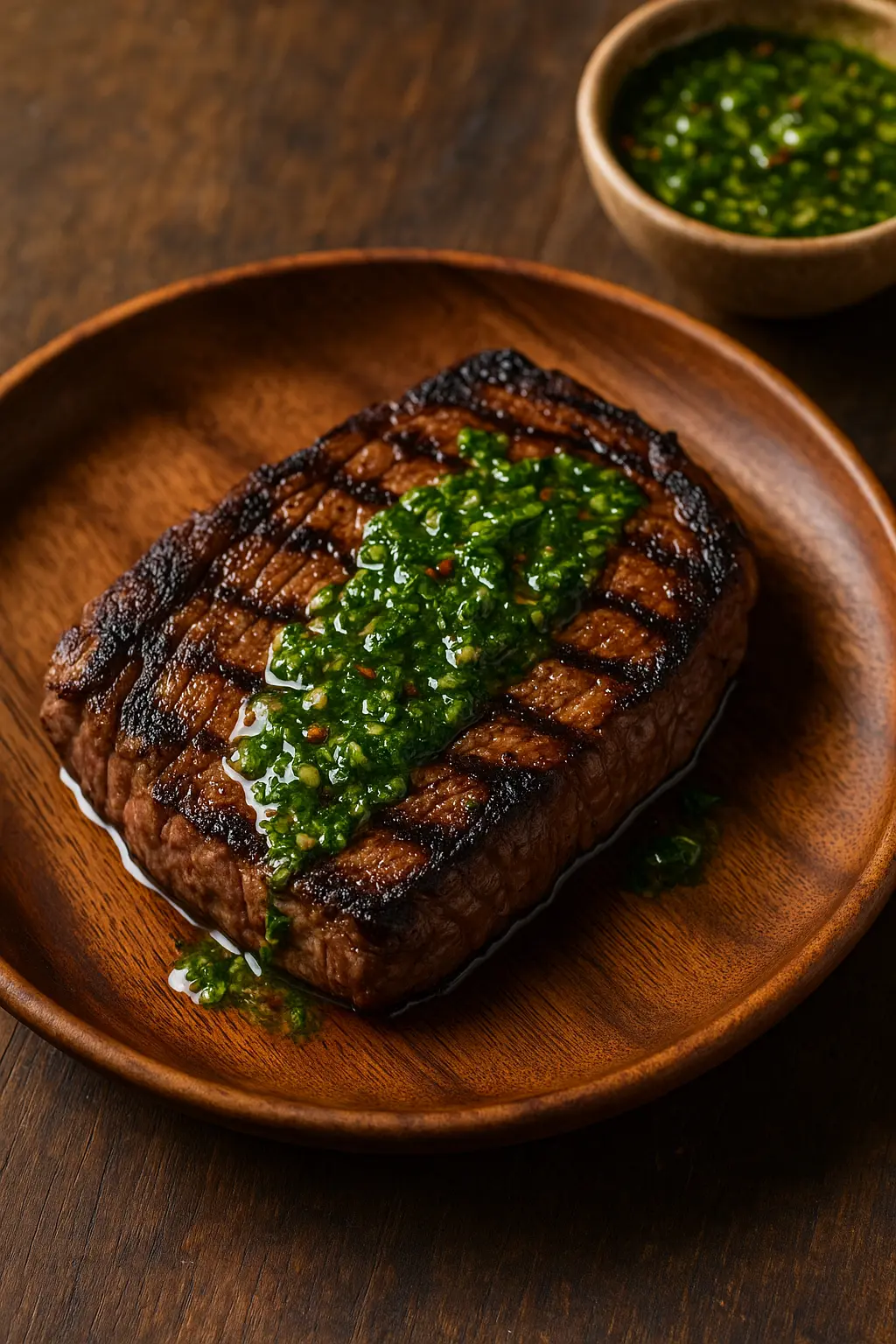
Chimichurri Sauce on Steak – Bold & Herby Recipe You’ll Crave Again
There are steaks… and then there are steaks crowned with chimichurri sauce — a zesty, herb-forward explosion that takes any cut of grilled meat from good to unforgettable.
If you’ve ever bitten into a juicy steak topped with a drizzle of vibrant green chimichurri, you know exactly what we’re talking about. And if you haven’t? Buckle up, because you’re about to learn how to make the ultimate chimichurri sauce on steak — fresh, quick, authentic, and downright addictive.
In this guide, we’ll show you:
- What makes chimichurri special for steak
- How to make the classic Argentine version at home
- Pro chef tips to balance flavors just right
- Variations (spicy, red chimichurri, etc.)
- How to store and reuse it
Whether you’re firing up the grill this weekend or planning a quick pan-seared dinner, chimichurri sauce on steak is the bold flavor boost your plate has been waiting for.
Let’s dive in, one spoonful of magic at a time.
Table of Contents
Why Chimichurri Is the Perfect Sauce for Steak
When it comes to grilled meat, everyone has their favorite sauces — peppercorn, mushroom, red wine reduction… But chimichurri? It’s in a league of its own.
Chimichurri is deeply rooted in Argentinian grilling traditions, known as asado, and has become a staple condiment across South America.
Learn more about its cultural background on Wikipedia.
A Flavor Bomb Made for Meat Lovers
Chimichurri sauce is an uncooked, herb-based condiment originating from Argentina and Uruguay. Its main ingredients — fresh parsley, garlic, vinegar, and olive oil — are simple, yet when combined, they create something extraordinary: a tangy, aromatic burst that cuts through the richness of steak with perfection.
The acidity balances the fat, the herbs bring freshness, and the garlic adds punch. It’s bold without overpowering. It’s fresh but not bland. And above all, it enhances the steak — never competes with it.
Why It Works So Well on Steak
Unlike creamy or heavy sauces, chimichurri has a naturally light texture. This lets the flavor soak into grilled beef instead of masking it. That’s why professional chefs and backyard grillers alike swear by chimichurri sauce on steak.
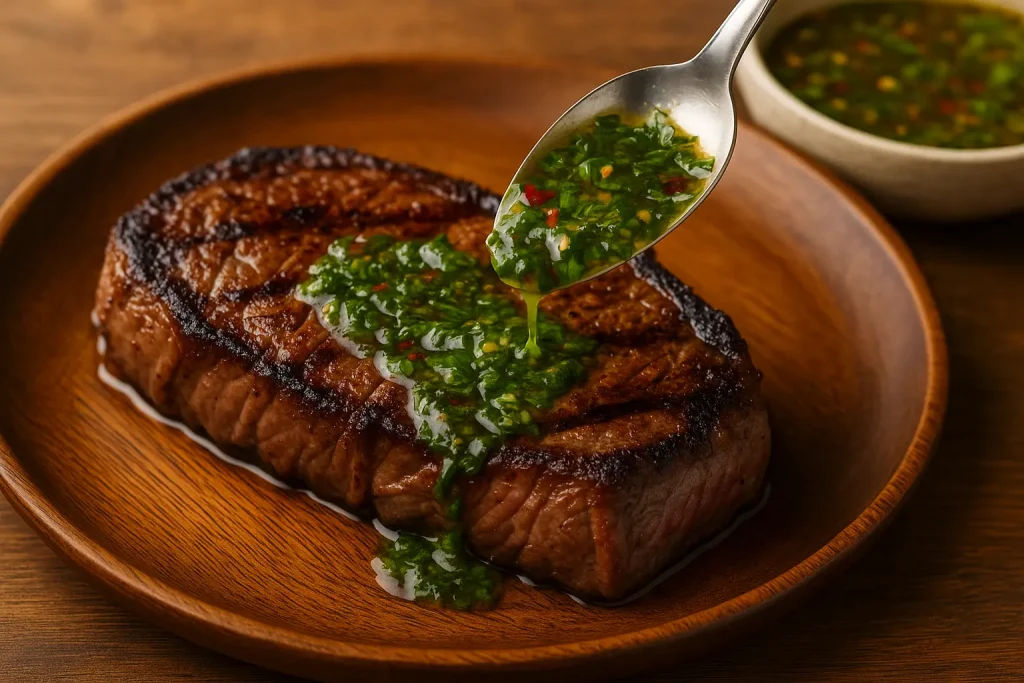
It clings beautifully to charred grill marks, seeps into every juicy slice, and gives your meat a pop of color that screams “flavor explosion.”
Pro Tip: Always spoon chimichurri sauce after grilling your steak. The herbs stay bright and the flavors stay fresh.
Bonus: It’s Healthy, Too
Because it’s oil-based and packed with herbs, chimichurri is naturally low in carbs, gluten-free, and keto/paleo friendly. That makes it a smart (and delicious) choice for modern eaters.
Ready to make your own? Let’s jump to the ingredients.
Ingredients You’ll Need
One of the greatest things about chimichurri sauce on steak is its simplicity. No fancy gadgets. No rare ingredients. Just a handful of pantry staples and fresh herbs — combined into something extraordinary.
Here’s what you’ll need to craft a chimichurri that tastes like it came straight out of a Buenos Aires steakhouse:
Fresh Parsley (flat-leaf preferred)
This is the backbone of any chimichurri sauce. Flat-leaf (Italian) parsley has stronger flavor than curly parsley and blends beautifully. It brings that iconic green color and herby punch.
Pro tip: Avoid pre-chopped herbs — they lose flavor fast.
Garlic (lots of it)
Garlic is what gives chimichurri its bold, signature bite. Don’t hold back. Use fresh cloves, not garlic powder. You want that real zing.
Red Wine Vinegar
The vinegar balances the oil and cuts through the richness of the steak. Red wine vinegar is traditional, but you can substitute with white wine vinegar or even lemon juice in a pinch.
Want a sharper tang? Add a tiny splash of extra vinegar before serving.
Olive Oil (extra virgin)
This carries all the flavors and helps the sauce glide over the steak like liquid gold. Don’t skimp — a good EVOO makes all the difference.
Oregano (dried or fresh)
A small amount of oregano adds depth and authenticity. Argentinians often use dried oregano — it concentrates the flavor beautifully.
Red Pepper Flakes (optional)
Want a little heat? A pinch of red pepper flakes goes a long way. You can skip it if you prefer a mild version, but spice lovers — go for it.
Salt & Black Pepper
Balance is key. Salt enhances all the ingredients, while a touch of black pepper brings subtle warmth.
Optional: Cilantro or Shallots
Some variations of chimichurri sauce include cilantro for extra freshness, or finely minced shallots for a more gourmet twist. Feel free to experiment.
Now that your ingredients are ready, it’s time to make this magic sauce in your own kitchen.
Let’s get blending.
Step-by-Step Recipe for Chimichurri Sauce
You don’t need to be a chef to make this — just a cutting board, a bowl, and a few fresh ingredients. Here’s how to make a chimichurri sauce for steak that will turn every bite into a flavor explosion.
Step 1: Finely Chop Your Herbs
Start by chopping the parsley as finely as you can. This is where the magic begins.
- Use a sharp knife (not a blender — unless you want a pesto-style texture).
- Aim for small, uniform bits so the sauce spreads evenly.
Want to add cilantro? Use half parsley, half cilantro for a more Latin-inspired version.
Step 2: Mince the Garlic
Peel and finely mince 3–4 cloves of fresh garlic. You want it almost paste-like, so it fully infuses the oil and vinegar mixture.
Don’t skip this: garlic is a big part of what makes chimichurri sauce on steak unforgettable.
Step 3: Mix in the Dry Ingredients
In a bowl, combine:
- 1 teaspoon of dried oregano
- ½ teaspoon red pepper flakes (adjust to taste)
- A generous pinch of sea salt
- A few cracks of black pepper
This dry base gives the sauce depth and dimension.
Step 4: Add Vinegar and Let It Sit
Now, pour in 2 tablespoons of red wine vinegar. Stir well and let it sit for 5 minutes.
This step hydrates the herbs and softens the raw garlic bite. It also builds the acidic foundation that makes chimichurri sauce on steak cut through fatty meats so well.
Step 5: Pour in the Olive Oil
Add ½ cup of extra virgin olive oil, slowly stirring as you pour.
This creates a beautiful, pourable sauce that’s vibrant green with specks of red, white, and black. It should be loose, not thick — remember, chimichurri is meant to drizzle, not cling like mayo.
Step 6: Let It Rest (If You Can)
Let your chimichurri rest for at least 20–30 minutes at room temperature. This allows the flavors to meld and deepen.
You can make it ahead and store it in the fridge for up to 5 days — just bring it to room temp before serving.
Chef’s Tip: If your chimichurri separates, that’s normal! Just give it a good stir or shake before serving.
And that’s it! You’ve just made a bold, bright chimichurri sauce on steak that’s ready to elevate your dinner in seconds.
Next up: let’s talk about how to actually use it for maximum flavor impact…
How to Pair Chimichurri with Steak
You’ve got your fresh chimichurri ready — now let’s talk steak. Because when you pair it right, the combo becomes more than just delicious. It becomes unforgettable.
Best Cuts of Steak for Chimichurri Sauce
While chimichurri sauce on steak works with just about any cut, certain steaks take it to another level. Here are top picks:
- Skirt Steak – Classic Argentinian favorite. Thin, juicy, and perfect for high-heat grilling. Chimichurri soaks in beautifully.
- Flank Steak – Lean, flavorful, and great for slicing against the grain. Perfect when marinated.
- Ribeye – Rich and fatty. Chimichurri cuts through the fat with its acidity.
- Sirloin or New York Strip – Solid all-around choice with great texture.
- Filet Mignon – Softer flavor, but elevated by the boldness of the sauce.
Tip: Avoid overpowering sauces for premium cuts like wagyu. But for most steaks, chimichurri is a perfect match.
When to Add Chimichurri: Before, During, or After?
There are three ways to serve chimichurri on steak — each one brings something special:
- After Grilling (Most Common)
Drizzle fresh chimichurri over sliced steak right before serving. This keeps the herbs vibrant and the flavor bright. - As a Marinade (Before Cooking)
Use half of your chimichurri as a quick marinade. Let your steak sit for 30–60 minutes before grilling. This infuses flavor deep into the meat. - Both (Pro Chef Method)
Marinate before. Grill. Rest the meat. Then spoon fresh chimichurri on top. Double flavor hit.
Side Dishes That Go Well with Chimichurri Steak
A well-paired plate makes all the difference. Here’s what goes beautifully with your chimichurri sauce on steak:
- Grilled vegetables (zucchini, bell peppers, asparagus)
- Roasted potatoes or crispy smashed potatoes
- Herbed rice or chimichurri quinoa
- Garlic bread or flatbread to mop up the sauce
- A glass of bold red wine (Malbec is a classic Argentinian match)
Serving Ideas for That “Wow” Effect
Want to impress? Try these presentation tips:
- Slice your steak against the grain, fan it out, and drizzle chimichurri down the middle.
- Serve sauce in a small bowl on the side for dipping.
- Add a sprig of parsley or cilantro for that finishing touch.
Now that you know how to pair it like a pro, let’s look at some fun variations of chimichurri you can explore — including red chimichurri, spicy twists, and more!
Variations You’ll Love (Cilantro, Spicy, Red Chimichurri & More)
One of the great things about chimichurri sauce on steak is how flexible it is. While the classic green version is legendary, there are several creative spins that can match your mood, your meal, or your spice level.
Here are the most delicious variations to try — without losing the essence of what makes chimichurri so addictive.
1. Cilantro Chimichurri
Love a fresh, slightly citrusy note? Try replacing half (or all) of the parsley with cilantro. The result is greener, brighter, and adds a Latin twist that pairs perfectly with grilled skirt steak or even tacos.
Best for: Flank steak, fajitas, or grilled chicken.
2. Spicy Chimichurri (with Jalapeño or Chili)
If you like a kick, turn up the heat. You can:
- Add fresh chopped jalapeño or red chili
- Boost the red pepper flakes
- Mix in a touch of smoked paprika for warmth
This version is perfect when you want chimichurri sauce on steak that’s bold and fiery — ideal for BBQ nights.
Best for: Ribeye or sirloin — rich cuts that love spice.
3. Red Chimichurri (Chimichurri Rojo)
This vibrant variation swaps the parsley for roasted red peppers or sun-dried tomatoes, and adds a smoky sweetness that’s irresistible.
Common additions include:
- Paprika
- Cumin
- Tomato paste or red bell pepper purée
It’s thicker, deeper in flavor, and still phenomenal over steak. Some even use it as a steak sandwich spread.
Best for: Grilled tri-tip, steak sandwiches, or roasted veggies.
4. Shallot-Infused Chimichurri
Want to get fancy? Mince shallots ultra-fine and soak them in the vinegar before adding the oil. The shallots mellow out the acidity and add subtle complexity to your sauce.
Best for: Filet mignon or New York strip where you want delicate balance.
5. Garlic-Heavy Chimichurri (for the Bold)
Most recipes use 3–4 garlic cloves, but if you’re a garlic lover, crank it up. Try roasting one clove and mixing it with 2 raw ones — you get depth without raw bite.
It’s intense, yes — but incredible on a char-grilled steak where smoky meets sharp and herby.
Best for: Outdoor grilled steak with crispy edges.
Customizing Is the Key
The real beauty of chimichurri sauce on steak lies in its adaptability:
- Want it chunkier? Chop by hand.
- Want it smoother? Blend it quickly.
- Like citrus? Add a squeeze of lemon or lime.
There’s no “wrong” chimichurri — just different styles for different cravings.
Up next: now that you have your perfect sauce… how do you keep it fresh, store it like a pro, and avoid rookie mistakes?
Let’s break it down.
How to Store Chimichurri (Shelf Life & Pro Tips)
Once you’ve made your chimichurri sauce for steak, the next step is knowing how to keep it fresh — because let’s be honest, you’ll want to use it again and again.
Here’s how to store chimichurri properly and get the most out of every batch.
How Long Does Chimichurri Last?
Stored properly, homemade chimichurri can last:
- Up to 5–7 days in the refrigerator
- Up to 3 months in the freezer
But remember: the fresher, the better. Chimichurri is all about vibrant herbs and bold aromatics — which fade with time.
Best practice: Make smaller batches often, rather than storing large amounts long-term.
Refrigeration Tips
Here’s how to store chimichurri sauce on steak in the fridge like a pro:
- Use a clean glass jar with a tight lid
- Make sure all the herbs are fully submerged in oil — this prevents oxidation
- Stir before each use to redistribute the oil and flavors
Bonus tip: Add a thin layer of olive oil on top before sealing the jar — it acts as a natural preservative.
Can You Freeze Chimichurri?
Yes — and it freezes surprisingly well.
Here’s how:
- Portion your chimichurri into ice cube trays
- Once frozen, transfer cubes to a zip-lock freezer bag
- Thaw individual cubes as needed
This works great for meal prep, marinades, or tossing into hot grilled meats.
Important: The texture may change slightly after freezing (especially if blended), but the flavor remains strong.
What Not to Do
Avoid these common mistakes:
- ❌ Don’t leave chimichurri at room temp for more than 2 hours
- ❌ Don’t use dirty spoons — cross-contamination = faster spoilage
- ❌ Don’t blend too aggressively — it oxidizes faster
How to Know If It’s Gone Bad
Signs your chimichurri is no longer good:
- Dark brown or dull green color
- Strong sour or rancid smell
- Mushy or slimy texture
When in doubt — throw it out.
Next up: let’s address some of the most frequently asked questions about chimichurri sauce on steak — and set the record straight once and for all.
FAQs About Chimichurri Sauce on Steak
1. Can I use chimichurri sauce as a marinade for steak?
Absolutely! Chimichurri isn’t just a topping — it makes an excellent steak marinade too. The vinegar and garlic help tenderize the meat, while the herbs infuse it with bold flavor. Just be sure to marinate for 30 minutes to 2 hours max, especially if your sauce is acidic.
Pro tip: Use half of the chimichurri for marinating, and reserve the other half for drizzling on your grilled steak.
2. What does chimichurri taste like on steak?
Chimichurri sauce on steak delivers a flavor that’s tangy, herby, garlicky, and slightly spicy — depending on your recipe. It cuts through the richness of the meat without overpowering it, adding brightness and depth to every bite.
If you’ve never tried it, imagine a cross between pesto and vinaigrette… but sharper and more vibrant.
3. What type of steak goes best with chimichurri sauce?
Skirt steak, flank steak, and ribeye are top choices. They all absorb flavors well and have the kind of texture that benefits from the contrast of fresh herbs and acidity.
However, even sirloin, NY strip, or filet mignon can be elevated with chimichurri — it’s incredibly versatile.
4. Is chimichurri spicy?
Not by default — the classic chimichurri recipe is herby and tangy, not spicy. But you can add heat by mixing in red pepper flakes, fresh chili, jalapeño, or hot paprika.
If you’re heat-sensitive, just skip the spicy additions and enjoy the freshness.
5. How do I store leftover chimichurri sauce on steak?
Store leftovers in an airtight container in the fridge for up to 5–7 days. Make sure the herbs are covered with oil to prevent browning. You can also freeze it in cubes for longer storage — just thaw and stir before using.
6. Can I make chimichurri in advance?
Yes — in fact, it’s better after a few hours! The flavors meld together over time, giving you a deeper, more balanced result. Just bring it back to room temperature before serving over steak.
7. Is chimichurri keto, vegan, or gluten-free?
Yes, yes, and yes!
Chimichurri sauce on steak is naturally:
- ✅ Gluten-free
- ✅ Vegan (no animal products)
- ✅ Keto & low-carb (made with herbs, oil, and vinegar)
It’s one of the most diet-friendly sauces you can make.
That wraps up our most common questions. If you’ve still got doubts or flavor ideas, drop them and contact us here — we love hearing how our readers use chimichurri in their own kitchens!
Final Thoughts: A Simple Sauce That Transforms Every Steak
There’s a reason why chefs, grill masters, and home cooks around the world swear by chimichurri sauce on steak.
It’s not just a sauce — it’s a celebration of contrast:
- Fresh herbs against smoky char
- Tangy vinegar cutting rich fat
- Bold garlic waking up your taste buds
Whether you’re cooking up a quick weeknight dinner or hosting a full-on backyard barbecue, chimichurri has the power to elevate any steak from ordinary to extraordinary — with just a spoonful.
And the best part? It’s endlessly customizable. Spicy, garlicky, citrusy, or classic — you control the flavor, the heat, and the vibe.
So next time you fire up the grill, skip the bottle of store-bought sauce and go homemade. You’ll be amazed at what a handful of fresh ingredients can do.
Tried this chimichurri sauce on your steak?
Let us know ! And if you’ve got a killer variation or steak pairing — we’re all ears.